Skip to content

Manuka State Wayside Park

Fri, 4 Jan 2013, 11:02 PM (-06:00) Creative Commons License

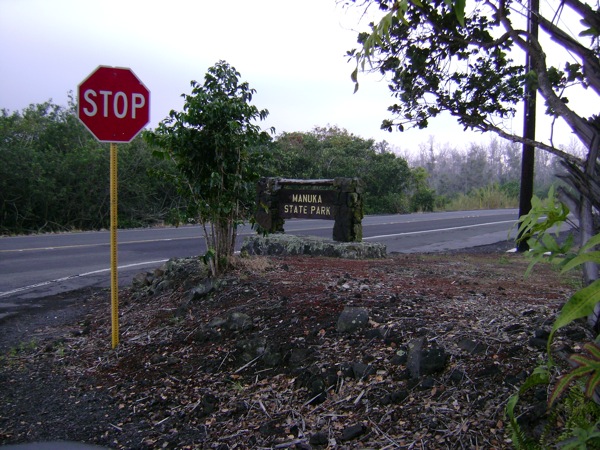
The sign said Manuka State Park.

DSC01853

But I’ve seen it called Manuka State Wayside or Manuka State Wayside Park.

It’s relatively small place. The Hawaii State Parks web page can only muster three sentences about it. They tell you is has trees, that you can picnic there, that there’s a nature trail and that there’s open shelter camping.

When we got out of the Jeep, we saw a sign for the self-guided nature trail. And when we saw that there were brochures in the box, we looked at each other and smiled.

The sign said to plan on 2-3 hours to hike the three mile loop. Two to three hours!? That would put us on the trail after sunset—clearly not an option. There was only enough daylight left to hike up a ways and then come back. So that’s what we did.

The ground was red and brown lava that was sharp and crunched under our boots. The path descended at first and then began climbing up. Soon there were steep steps and large lava boulders, and I was building up a sweat. We were happy we had boots.

On the trail, it got quiet. The only sounds were the crunching of our boots, chirping crickets and a bird somewhere far away in the woods. The air was sweet from the perfume of white flowers that were blossoming all around.

Chirp-beep. … Chirp-beep!

It wasn’t just one bird. Now there was another one calling back from the woods on the other side.

Chirp-beep! Chirp-beep.

And as we walked past markers 1, 2, 3, 4, 5, the bird calls got busier. There were a few all around us. And then there were many. And then the woods was a riot of chirping and beeping. Chirp-beep. Chirp-beep. Chirp-beep. It was Bob-Whitish in tempo but higher in pitch, almost frog-like.

By marker 6, the nature of the trail had changed. The air was thick with dampness and pressed in around us. Ferns grew out into the path from the forest understory. Moss grew on the lava ground.

Chirp-beep.

Those weren’t birds, at all. They were frogs. All around us there was this cacophony of hundreds, thousands of frogs. This was their place, not ours. It might as well have been miles from the road. We were the only ones on the trail. Chirp-beep. Chirp-beep! Except for all of them.

Sadly, we were out of time. Next time, maybe, we’ll have 2-3 hours, and we’ll be able to hike the whole loop. Next time. In the event, however, a short hike in the woods thru the sweet perfume of flowers and the song of the frogs was entirely sufficient for us.

No Green Sand For You

Thu, 3 Jan 2013, 10:22 PM (-06:00) Creative Commons License

1. Going to Green Sands

We had this idea. Why not drive to Green Sand beach?

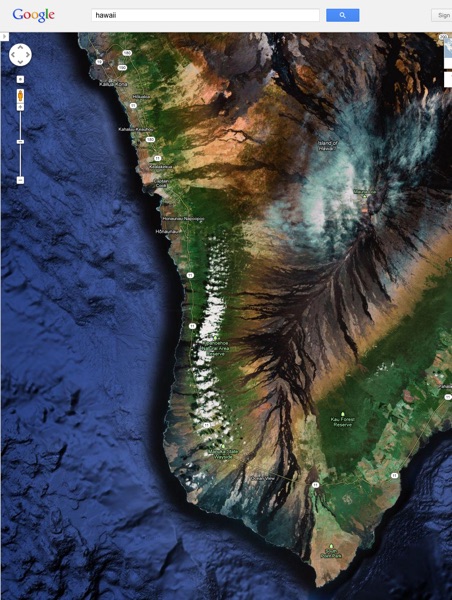
Green Sand or Mahana or Papkolea beach near South Point in Ka‘u is actually the remains of a cinder cone that erupted 50,000 years ago. The ocean has worn it away, and green olivine sand covers the shore. And from that description, you should realize that we didn’t have this idea at all. It was the fair and industrious geologist beside me who reasoned that since you need a 4×4 to drive the road to South Point, and since we had a rental 4×4 Jeep at our disposal, and since it is one of two olivine beaches in the world… well why on earth not!? 

It got cooler as we climbed the side of the island on the increasingly narrow Highway 11. As the road twisted and turned, it started to rain. And as the rain began to come down in earnest, the sides of the road got surprisingly steep. And then, in the rain on the edge of a precipice, Trudy discovered what the rental guy at the airport had actually told us two days before: you can go almost anywhere on the island with their Jeeps, but you aren’t allowed to drive to Green Sands beach.

There was nowhere to turn around.

2. What We Did Instead

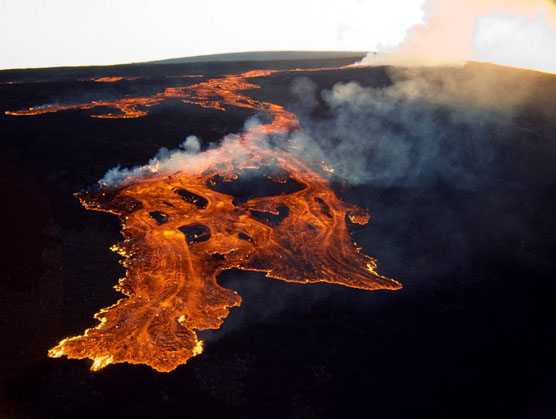
The landscape there is bleak. The island loses the jungle feel of Kona and has more of a slag-heap look, as if a crack in the earth had opened and belched flame and flowing rock.

… Oh wait. That’s what Hawaii is.

Still, I tell you in places this was utterly forsaken land. I kept driving as Trudy studied her maps and guidebooks for an alternative plan. And of course, she found something.

There on one of the maps, although entirely unmentioned in any of the guidebooks, is Manuka State Park. We keep a lookout as we drive along. The rain has stopped, and we hope perhaps for a hike.

A mile or two after Kipahoehoe State Natural Area, where not so long ago the earth did open up and black pahoehoe did flow across the land, I went roaring past the entrance to the park. But the road was wider now, so I turned around and drove into the park and stopped beside some picnic tables.

No one else was there, except a guy in his pickup truck who looked as if he might just live there in his truck most of the time. And except there was this other guy who came walking briskly down the trail out of the forest taking great strides and making for I don’t know what because frankly I don’t remember a car in the parking lot that would have been his.

This was it. This was our substitute for Green Sand beach.

Kealakekua Bay

Wed, 2 Jan 2013, 04:14 PM (-06:00) Creative Commons License

Near Kealakekua Bay


Kealakekua bay

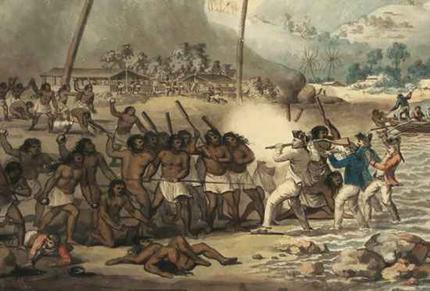
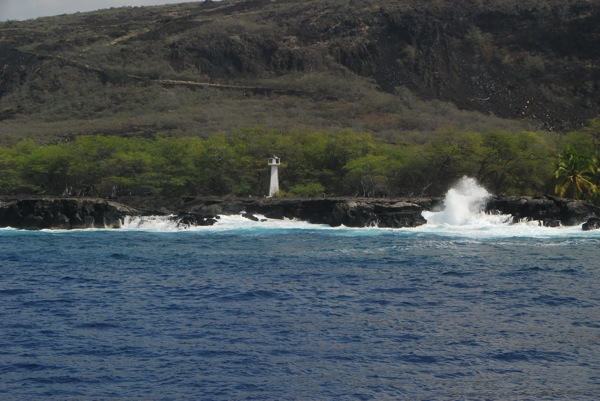
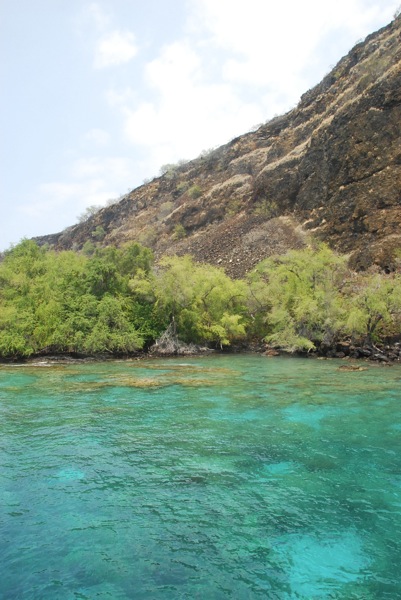
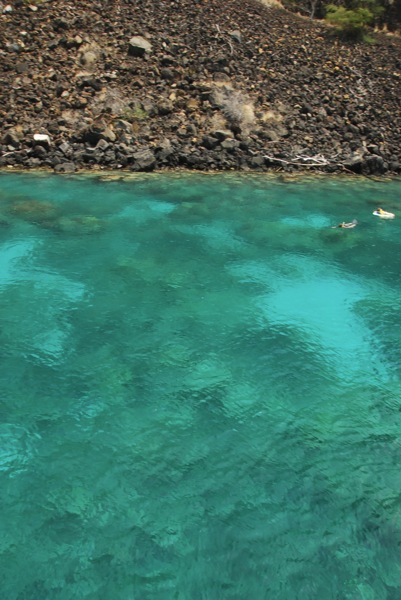
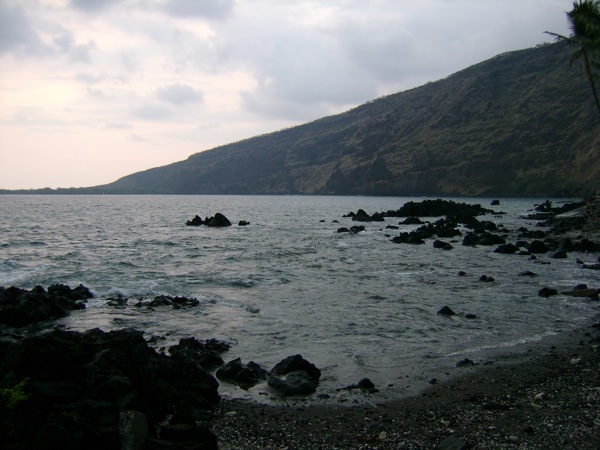
Where Captain Cook landed during the height of Makahiki in January 1779. And where we went snorkeling from the deck of the Fair Wind II in April 2012.

Kahalu‘u Beach

Wed, 2 Jan 2013, 12:02 PM (-06:00) Creative Commons License

The sky was blue. The day was warm. Sunlight glinted off aquamarine water. We sat on the salt-and-pepper beach gazing up the slopes at rain clouds hugging the forest on the mountainside.

It was low tide. The water was far from the sandy shore, and we had to clamber over sharp, black rocks in our flippers to get to the edge.

We swam along the contours. The swells lifted us up until it felt like flying. And they pushed us down to where darting fish and neon anemones hid in crevices and nooks and crannies. After swimming along this way for a while, we would get disoriented and poke our begoggled faces above the water to see where we were.

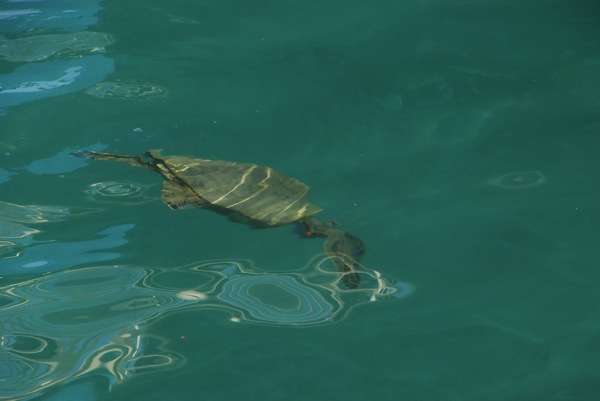
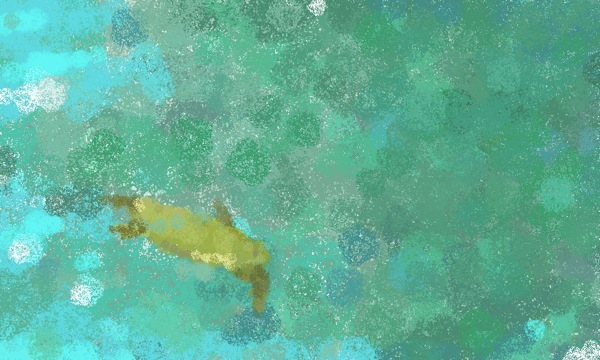
And as we swam there, a sea turtle passed us by.

Trudy looked back at me, her eyes wide, her finger pointing. I nodded, and we swam a while alongside as the turtle in great sweeps of its fins glided along the counters and rose and fell in the swells on its way to someplace that it seemed to have in mind. We swam alongside, keeping our distance, until the water got shallower and the swells threatened to push us down onto the rocks.

The sea turtle, it kept going.

Sea turtle


Before We Drive Off

Wed, 2 Jan 2013, 10:08 AM (-06:00) Creative Commons License

Before we drive off, one more from Pu‘uhonua O Honaunau:

Puuhonuaohonaunau

Ranger Kalehua

Tue, 1 Jan 2013, 08:44 PM (-06:00) Creative Commons License

Ranger Kalehua gave a good talk. He told a good story, and he kept his audience involved in the telling of it. In fact, Kalehua had a knack for spotting people in the audience who might make good targets and pointing to them and saying, “Quick, what’s the name of this place?”

Pu‘uhonua O Honaunau

He picked on the kids, who relished it. He picked on dads standing off to the side. And he picked on…

“Are you going to embarrass me?” Trudy asks.

“No,” I say.

Let’s say that Kalehua had this knack for calling on people whom he must have been certain would tie their tongues in knots trying to speak the name of that place. And well, since I promised not to embarrass the fair and industrious Trudy, let’s just say that she got a fine braided Ti-leaf as a prize.

Pu‘uhonua O Honaunau

Tue, 1 Jan 2013, 08:32 PM (-06:00) Creative Commons License

A place of black volcanic rock. Stark against the blue ocean. Black walls of ancient temples at the southern end of Honaunau Bay. Pu‘uhonua O Honaunau National Park. (Say that three times fast!)

DSC 7923 DSC 7930

This was our main destination for the day. And we timed it well without knowing it, because just after we got there, Kalehua, a park ranger was scheduled to give an afternoon talk. He’s been a ranger there for 25 years, but he says he wishes he started earlier.

Kalehua told us about the place. About the migration of Polynesian people to Hawaii centuries ago. About the four gods, Ku, Lono, Kane and Kaneloa. He told us about kapu (tabu) that governed Hawaiian society. About death to anyone who broke it. To anyone who looked at a chief. To anyone whose shadow fell on royal lands. He told us how the kapu were absolute.

“No misdemeanors,” he said, “only death.”

And he told us how this place… And at this point, he’d stop and say, “Quick!” and point to someone in the audience. “What is the name of this place?” awarding a braided ti-leaf for a correct answer.

Pu‘uhonua O Honaunau

He told us how this place was a temple of refuge, a place of forgiveness for anyone who broke the kapu. Forgiveness, that is, if they could reach the sacred grounds by swimming across the bay and clambering up the sharp rocks on the shore before their executioners could catch them.

Today, a long wall and several platforms mark the place. The water of the bay still laps on its rocky shores. And sea turtles take refuge in the shallow tidal pools.

DSC 7937

But the chiefs and their kapus are gone.

The Coffee Shack

Tue, 1 Jan 2013, 12:51 AM (-06:00) Creative Commons License

Highway 11 on the Kona coast is extremely narrow there. The mountain rises up on the one side and drops off steeply on the other side of the two-lane road. Yet just beyond The Coffee Shack there was a narrow pull-off on the narrow shoulder where two cares were parked. Evidently this was the overflow lot.

“Pull over here,” Trudy said, pointing to a space in front of the second car — a narrow triangular space barely long enough and barely wide enough for a car to fit. Perhaps she thought her husband would just whip their rental Jeep over and pull into that tiny spot. Or maybe she thought he’d back into it.

Right.

His first day of driving that Jeep, and he was going to parallel park along the edge of a precipice 1400 feet up the summit of a volcano with a vertical drop awaiting any tire that strays just a bit to far? 

He passed the spot and found a place further down where he could pull off the road on the other side, the mountain side, of the road. And they walked the quarter mile or so back to The Coffee Shack and ate sandwiches and drank Kona coffee as the gazed out the windows down the steep slopes of the mountain out toward the ocean.

DSC 7872 DSC 7877

Catamaran

Mon, 31 Dec 2012, 06:32 PM (-06:00) Creative Commons License

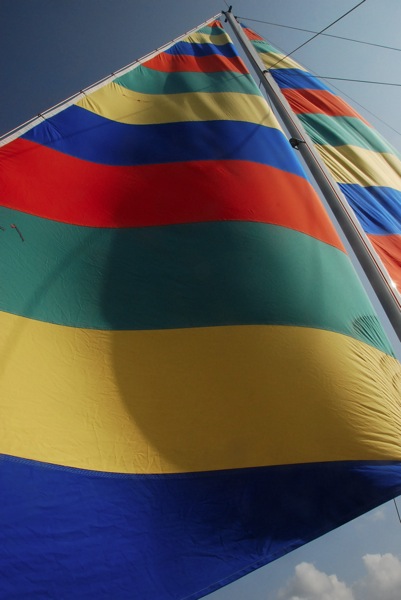
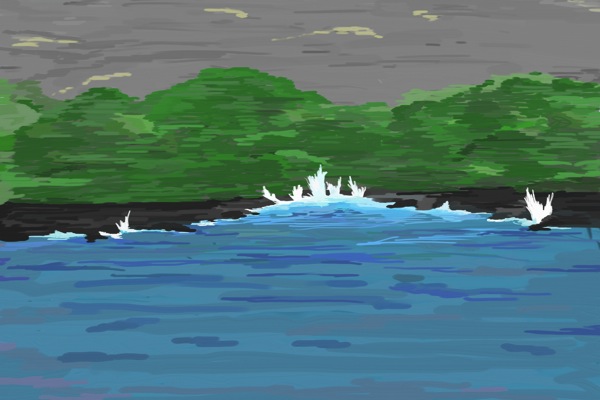
Blue sky. White clouds roll by. Cool breeze blowing off the ocean. Deep blue waters. White waves breaking on black rocks. And oh my gosh, would you believe it? There goes a Hawaiian catamaran under sail. Two yellow hulls kicking up whitecaps. A brown-orange sail full with the wind of the deep blue sea.

Why are you writing about that?

I don’t want you to do anything.

I mean, come on. I know that last spring you had a vacation there and all that. But puffy clouds and breezy breezes and a boat sailing by. Really, what’s the point?

No point. I’m just writing about it, because it was cool. We were out there with the breeze from the ocean in our face. The sky and water were shimmering in these hues of blue I never thought I’d need to describe. And as we’re standing there, this catamaran sails by with the white froth of its wake trailing behind it, with the triangular sail full of the wind. Do what you want with these words, man. You don’t even need to read them, but I tell you, the blue of the sky and the deep blue of the ocean and the bright yellow of the two catamaran hulls was something to behold.

Sheesh. Next thing you know, you’ll be uploading a silly sketch.

That’s a fine idea.

Catamaran

Sorry I mentioned it. And FWI, the sail isn’t brown-orange.

Whatever.

What’s With the Lanais?

Sun, 30 Dec 2012, 01:46 PM (-06:00) Creative Commons License

And so how does it work with these … verandahs, these big Hawaiian porches, these lanais? These open patios with great flat ceilings to shelter you from the rain or bright sun but otherwise open to the elements. I’m not even sure what you call these places, and I certainly don’t know how they work.

What happens during a storm? Do they take all the furniture away? Do they nail it down? All the tables and chairs and comfortable couches. Do they throw tarps over it to keep it dry?

Or does the rain just mostly fall straight from the sky, leaving everything under these roofs dry? That would explain why the ceilings extend so far out. But seriously, does the wind not blow when the rain falls? And what about the front desks and the paper on the counters and their computers and telephones and things? What happens to them?

It was like this at the airports in Honolulu and Lihue and Kona. It was like this at The Islander in Kapaʻa. And it’s like that here. I just don’t understand it. And it’s so wonderful.

(Part of the ongoing telling of our Spring 2011 trip to Hawaiʻi.)

© jumpingfish by David Hasan is licensed under a Creative Commons Attribution-NonCommercial-ShareAlike 4.0 International License